Iraqi Studies Conference: Past, Present, and Future

28-29 February 2020

This two-day conference brings together a diverse group of established and emerging scholars working on the history of modern Iraq from the Ottoman period to the present to interrogate Iraqi studies; taking stock of its past, reflecting on the present, and looking towards its future. Studies of modern Iraq have grown qualitatively and quantitatively in recent years. There is now a critical mass of innovative scholars in the US, Europe, and the Middle East who work on Iraq and are exploring new lines of inquiry in a number of different directions. It is common to see Iraq-themed panels and round tables at international conferences. Given this volume of scholarly activity connected to modern Iraq, it is an opportune time to critically reflect on and examine Iraqi studies and its status as a burgeoning sub-field of Middle East Studies. 

Visit the conference website for more information.
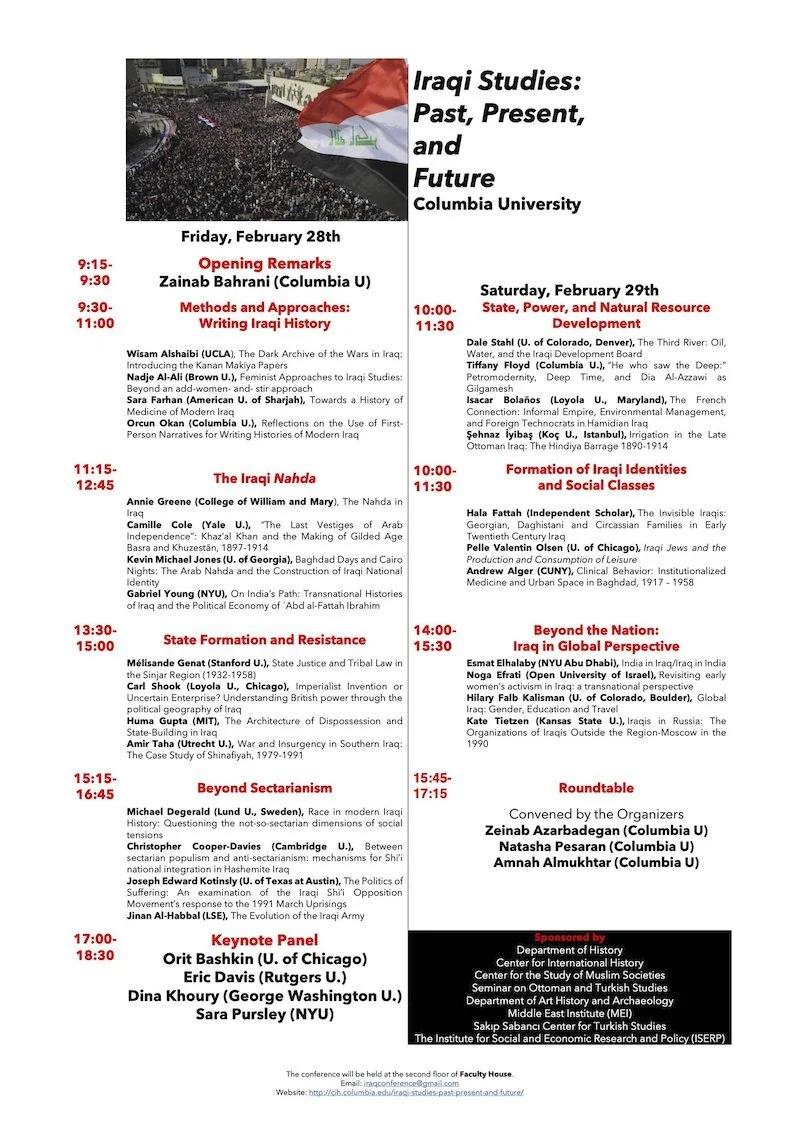
image-asset.jpeg

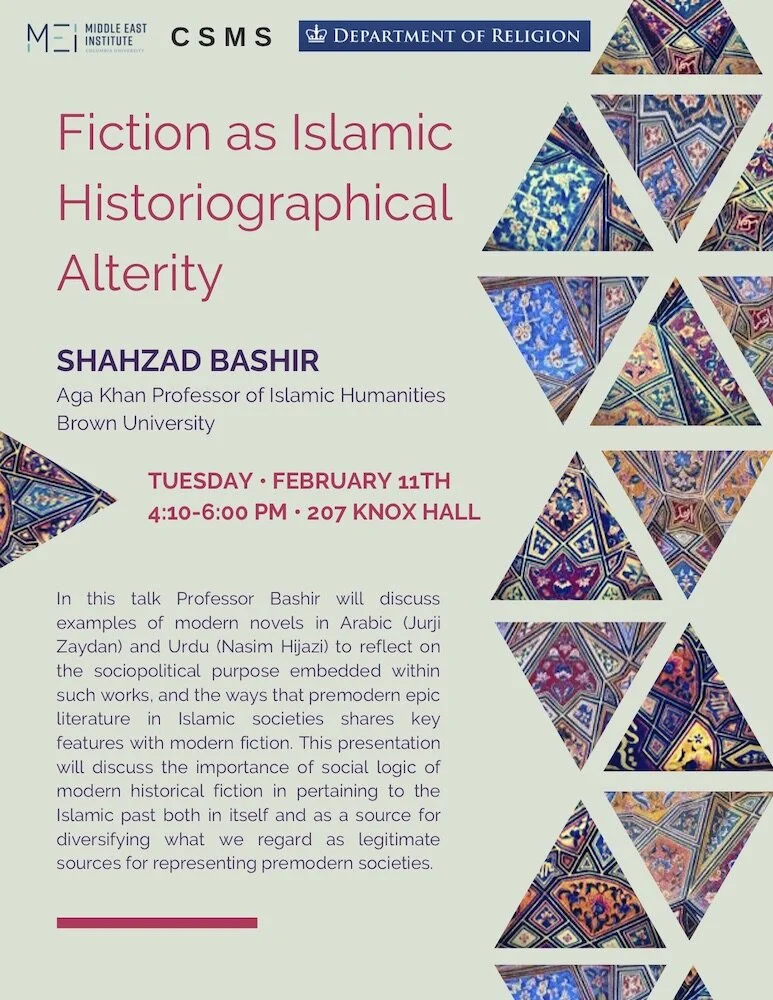
Lecture: Fiction as Islamic Historiographical Alterity by Shazad Bashir

Bashir 2.11.jpg

In this talk Professor Bashir will discuss examples of modern novels in Arabic (Jurji Zaydan) and Urdu (Nasim Hijazi) to reflect on the sociopolitical purpose embedded within such works, and the ways that premodern epic literature in Islamic societies shares key features with modern fiction. This presentation will discuss the importance of social logic of modern historical fiction in pertaining to the Islamic past both in itself and as a source for diversifying what we regard as legitimate sources for representing premodern societies.

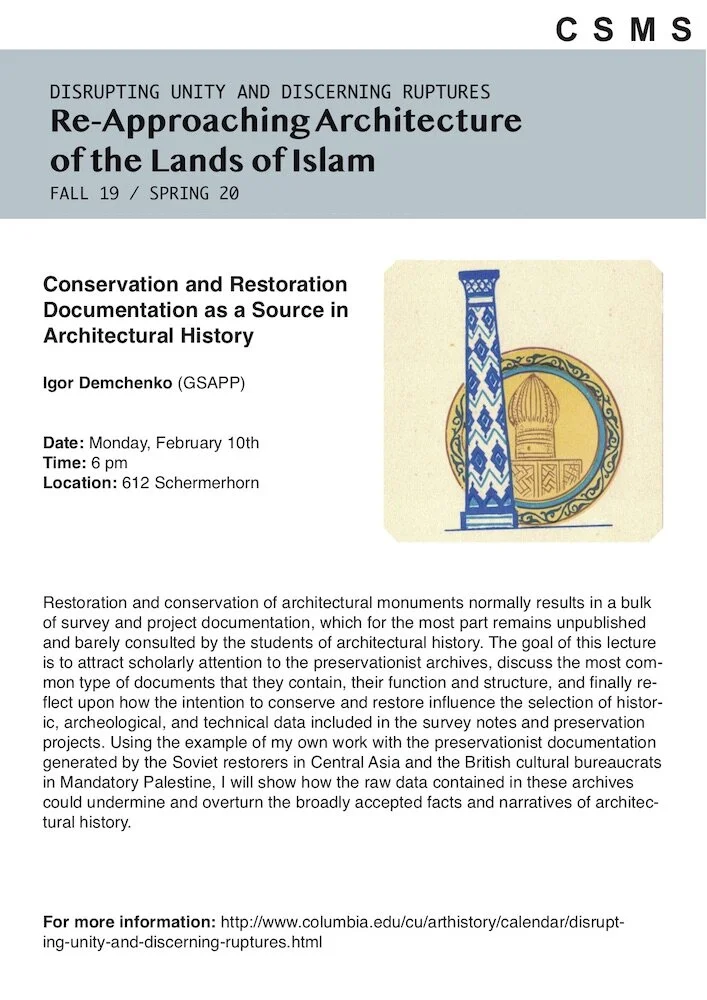
Lecture: Conservation and Restoration Documentation as a Source in Architectural History

Demchenko_02.10.2020.jpg

Restoration and conservation of architectural monuments normally results in a bulk of survey and project documentation, which for the most part remains unpublished and barely consulted by the students of architectural history. The goal of this lecture is to attract scholarly attention to the preservationist archives, discuss the most common type of documents that they contain, their function and structure, and finally reflect upon how the intention to conserve and restore influence the selection of historic, archeological, and technical data included in the survey notes and preservation projects. Using the example of my own work with the preservationist documentation generated by the Soviet restorers in Central Asia and the British cultural bureaucrats in Mandatory Palestine, I will show how the raw data contained in these archives could undermine and overturn the broadly accepted facts and narratives of architectural history.