CSMS Year in Review

2020 will be remembered for the dual impacts of the Covid-19 rampage in New York City, with the loss of lives and economic turmoil, and also of the widespread protests and calls for racial justice associated with the Black Lives Matter movement.

Despite the challenges, CSMS is grateful for the support of the community in coming together for a variety of events and programming. This was most embodied by our virtual concert in May to celebrate Columbia University's 2020 graduating class, and to mark the official launch of the Center for the Study of Muslim Societies. This extraordinary concert brought together a diversity of Muslim musicians who shared their incredible talents from their living rooms across the country. In solidarity with movements in protest of racial inequalities, racism and bigotry, their shared voices transcended boundaries and demonstrated how we can all unite even in these challenging times.

We invite you to read our CSMS Year in Review to learn more about our work over 2020. Thank you all for your continued engagement and support for CSMS and we look forward to many new opportunities and events in the new year.
Special Issue on the Manuscripts of the Muslim World Project

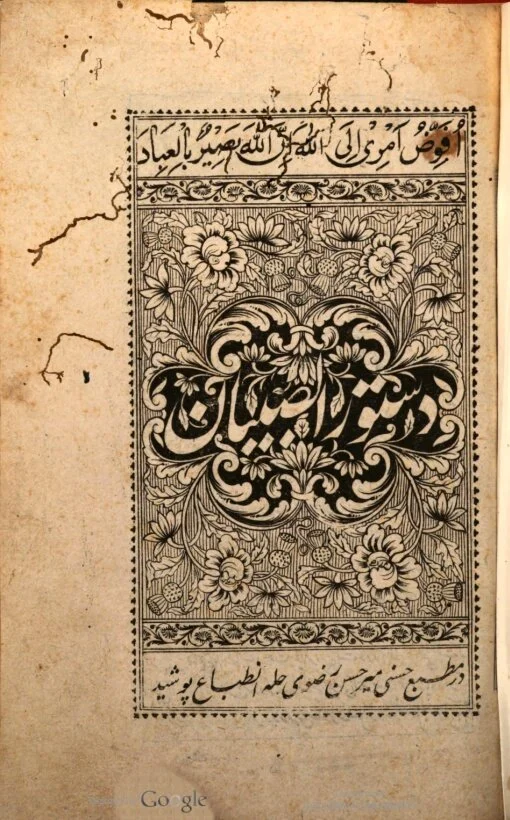
Naunidhi Raʹē. (12611845). Dastūruʹl-ṣibyān. Rare Book, RBML (Non-Circ) 892.84 N225

Naunidhi Raʹē. (12611845). Dastūruʹl-ṣibyān. Rare Book, RBML (Non-Circ) 892.84 N225

We are excited to announce the publication of a special issue on the Manuscripts of the Muslim World Project in the November 2020 issue of the  Journal of Philological Encounters. Making a Hidden Collection Visible: Columbia’s Collection of Muslim World Manuscripts, edited by Zeinab Azarbadegan and Mohammad Sadegh Ansari, features six contributions by librarians and scholars on the manuscript collection at Columbia University’s Rare Book and Manuscript Library (RBML).

The contributions by Kaoukab Chebaro & Jane Rodgers Siegel, Avinoam Shalem, Alexandre M. Roberts,  A. Tunç ŞenTrevor Brabyn & Mohammad Sadegh Ansari, and Zeinab Azarbadegan explore the history of the collections as well as themes of authority and originality, transmission of knowledge, and history of science. They offer a variety of methodological approaches to study of manuscripts from across disciplinary, regional, and linguistic specialties. The issue ends with an afterword by Marwa Elshakry.

The special issue is part of the larger project of the scholarly efforts to further publicize the contents and importance of the collections at RBML. This has included the “Rediscovering Words and Worlds: Arabic Script Collections at Columbia University” (February 16-17, 2017), the ongoing cataloging project by the University Libraries, and the digitisation as part of the CLIR-Mellon Hidden Collections grant.


November 24: A Reading and Conversation with Amra Sabic-El-Rayess

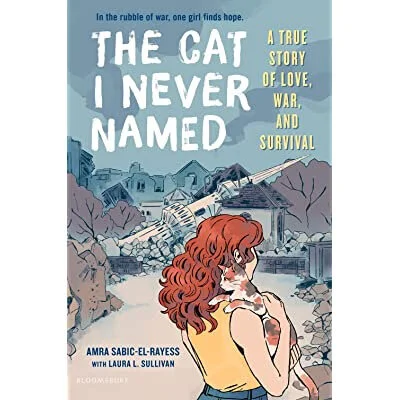
The Cat I Never Named: A True Story of Love, War, and Survival

Tuesday, November 24, 2020, 11:00-12:15 PM EST

Register for the Zoom webinar here.

thecatinevernamed.jpg

Amra Sabic-El-Rayess will read from and discuss her memoir, The Cat I Never Named: A True Story of Love, War, and Survival. Amra grew up in Bihać, Bosnia and Herzegovina and now lives in New York, where she teaches at Teachers College, Columbia University.

The memoir tells the story of a pivotal period of Bosniak history through the life of Amra, a young Muslim teen struggling to survive in the midst of the Bosnian genocide, and the stray cat who protected her family through it all.

The Cat I Never Named is a personal account of a Bosnian genocide survivor, whose family and friends were slaughtered because of their Muslim heritage during the Serbian siege on the city of Bihać. The memoir bravely wrestles with the rawness of human emotion in times of unembellished agony, exposing the ways war tests humanity. It is a witness of how dangerous visceral ethnic, racial, and religious hatred is. The critically acclaimed book explores ideas of populism, Islamophobia, and discrimination, and it covers themes related to narratives of hatred built around Muslim identities.

Presented by Columbia Global Centers - Amman.

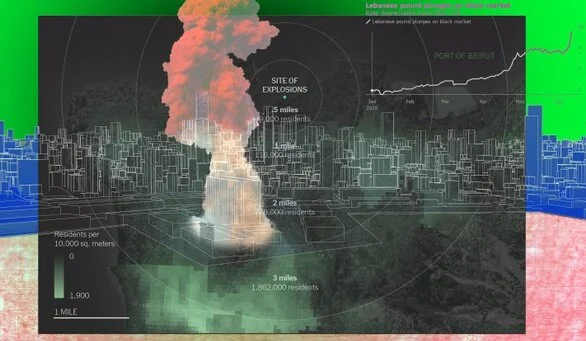
Emergency Architecture and Planning: Recovering Beirut Post-Explosion

Thursday, November 12, 2020, 12:00 PM

Free and open to the public. Virtual events hosted on Zoom Webinar do not require an account to attend, advanced registration is encouraged. Register to attend.

10.26.2020-Poster GSAPP Beirut 1.jpg

Following a series of economic, political and environmental crises that culminated in the Beirut explosion on August 4th 2020, the GSAPP Collective for Beirut, in collaboration with Assistant Professor Hiba Bou Akar invites a group of multidisciplinary professionals to a round table discussion that explores architecture and cities in a time of emergency and political deadlock through ecological, planning, and policy lenses. The discussion will engage questions of the built environment on a variety of social and infrastructural scales.

For more information visit the GSAPP website.

GSAPP Collective for Beirut is an interdisciplinary student and alumni organization dedicated to the promotion, discussion, and reflection of contemporary issues in the middle east, and Lebanon specifically. It was founded organically in 2020, in the aftermath of the Beirut blast by a group of like-minded students and alumni who studied asynchronously at Columbia University. They are currently based both in Beirut and abroad (New York, London, Amsterdam, Toronto). For more information contact the Collective.